
Cities With a Bad Reputation That I Actually Loved
Tired of cities being reduced to a single label before you even arrive? I’m here to share places that come with strong reputations, and how different they feel once you’re actually there.
Some are described as chaotic, unsafe, or overwhelming. Others are dismissed as dull, grey, or not worth much time. It’s easy to take that on when planning a trip, especially when those narratives are repeated so often.
But in reality, those labels don’t always hold up. The experience usually changes once you start moving through different neighbourhoods and spending a bit more time in the city.
This isn’t about proving a city wrong or rewriting its image. It’s more about what happens when you stop relying on reputation and just move through the place yourself, without trying to match it to a label.
Or maybe that is just my experience. After all, “beauty is in the eye of the beholder.”
*Disclosure: This article contains affiliate links. If you purchase after clicking one of these links, we earn a small commission at no extra cost to you. It’s a win-win!
Marseille


Marseille was one of those cities I was told to avoid. Rough, chaotic, not worth it. That was the reputation, but being there feels different, and it quickly becomes clear why people end up liking it. Between the views, the history, and that slightly rough edge, Marseille stays with you.
Walk through Le Panier early in the morning when it’s still quiet, then head to Vieux-Port around sunset. The atmosphere shifts throughout the day, and that change is part of the experience.
Make time for Notre-Dame de la Garde, where the views over the city and the Mediterranean are easily the best in Marseille. Closer to the center, Cathédrale La Major sits right by the water, massive and often overlooked.
And can we talk about the coastline? The sea is always there, visible from hills, streets, and terraces.
Would I travel to Marseille and spend all my holidays there? Probably not, but I would definitely include it in an itinerary when exploring the French Riviera.
Naples

Naples was another city I was warned about. Gritty, overwhelming, too much. But being there tells a different story. It is intense, but also beautiful in a way that feels very real and hard to forget.
At first, Naples hits you all at once with noise, movement, and energy, but after a while, it starts to slow down and make more sense. You begin to notice the way views open up between buildings, with the Gulf in front of you and Mount Vesuvius always in the background.
This is one of the oldest cities in Europe, and its history is impossible to miss. It shows up everywhere, from the busy streets to quieter, more hidden places like Chiostro di Santa Chiara, which feels completely removed from the pace outside.
Naples is also the birthplace of pizza, and it is a perfect destination for foodies.
Milan


Milan was never meant to be the main destination for me. I first visited it as a base to explore other parts of Lombardy, but at this point, I have lost count of how many times I have been back, and I end up loving it every single time.
First, I’m sure you can’t deny that the Duomo di Milano is impressive. From there, walk through Galleria Vittorio Emanuele II, which is elegant, historic, and always full of life.
But Milan really opens up when you go a bit further. Places like Santa Maria delle Grazie, home to The Last Supper, and San Maurizio al Monastero Maggiore are easy to miss, but add a lot of depth to the city.
Spend some time in Brera, where small streets, cafés, and galleries make everything feel slower and more personal. From there, walk around Sforza Castle, then head to Navigli in the evening, where the atmosphere becomes more relaxed and social.
I honestly could go on forever, because Milan is always changing. There is always something new opening, a different area to explore, a new reason to walk the same streets again. It feels lively in a way that never really settles, and that is exactly why I keep coming back.
Bangkok


I actually hated my first few days in Bangkok, so it still feels strange to say that it is now one of my favorite cities in Asia.
Chaotic, polluted, overwhelming. That is the reputation, and at first, it does feel that way. But after a bit more time, the city starts to make sense and feel more balanced.
It is intense, but there is a rhythm to it. Golden temples appear around almost every corner, with places like the Grand Palace immediately standing out. Street food is everywhere and very much part of daily life.
The temples go far beyond the obvious. Wat Phra Kaew is the most famous, but places like Wat Benchamabophit feel calmer and more balanced.
Beyond the temples, the Bangkok canals show a completely different side of Bangkok. They feel quieter and more local, with wooden houses and slower movement, which contrasts with the traffic and skyscrapers.
Then you are back in the modern side of the city, with quiet cafés, luxury malls, and rooftop bars overlooking the skyline. It is a city of extremes, but somehow it all works, and that is exactly why I keep coming back.
Athens


Athens was another city I was unsure about, especially because so many people recommend skipping it and heading straight to the islands. Messy, chaotic, not very appealing. That is the reputation, but it feels more balanced once you are there.
Around Monastiraki, it is busy and a bit chaotic, full of shops and street life, but that quickly changes when you turn a corner and find a small church or a quiet square. That contrast is constant.
Museums are a big part of the city. The Acropolis Museum and National Archaeological Museum stand out, but even walking through the Ancient Agora of Athens gives you a mix of ruins and green space right in the center.
If you go down to Piraeus, the sea changes the pace, with more open views and less noise.
And then the food. Greece has some of the best food in the world, and Athens just hands it to you on every corner. In the evening, rooftops with views of the Acropolis add that extra magic!
Mexico City


Mexico City is huge, and it does feel overwhelming at first. But it becomes clearer once you start moving through its different neighborhoods.
The historic center around Zócalo is usually the first point of contact. It is vast, busy, and full of monumental buildings, with constant activity around the square.
From there, the city shifts quickly. In Chapultepec Castle and the surrounding park, the pace drops. There is more space, more greenery, and open views that change the tone completely.
Food is everywhere and not limited to one style or setting. Street stalls, local eateries, and more refined restaurants sit side by side, all grounded in a strong culinary tradition.
It is a city that keeps expanding as you explore it, and it does not really reveal itself in a single visit.
Lima


Lima is a city of contrasts, spread out across districts that each feel quite different from one another.
Miraflores is where most visits start. The coastline is the main draw here, with long cliffside walkways above the Pacific and wide open views that change the pace of the city. It feels structured, walkable, and relatively calm compared to the rest of Lima.
Food is one of the main reasons why I loved Lima. The range is broad, from simple local places to some of the most refined dining in South America. Quality is consistently high, and it shapes how you experience the city day to day.
The historic center feels more formal and layered with history. Lima Cathedral and the surrounding plazas bring a more traditional rhythm, with architecture that reflects the city’s colonial past.
Barranco is the most relaxed area. It has a slower pace, with small galleries, cafés, and street art scattered through quiet streets. It feels more local and creative, especially in the evenings.
A day trip to Callao adds a different perspective. The port area is known for large-scale street art, strong visual identity, and a rawer, more industrial atmosphere that contrasts with central Lima.
Ho Chi Minh City


Ho Chi Minh City moves fast. At street level, it can feel like constant motion, especially at first, when scooters dominate every direction and crossings feel more like timing than rules.
French colonial landmarks like the Saigon Central Post Office and Saigon Opera House sit within a dense urban grid of modern buildings, glass towers, and new cafés.
Markets bring the intensity back. Ben Thanh Market is one of the most active points in the city, with tight walkways, constant noise, and crowds. Just a few streets away, the atmosphere can shift completely into quieter residential blocks or more polished commercial areas.
At night, Bui Vien Walking Street changes the pace again. It is loud, crowded, and highly social, with a very direct energy that contrasts with the rest of the city.
Ho Chi Minh City is not built around calmness. It is built around movement, and once that stops feeling overwhelming, it becomes easier to navigate and observe.
Casablanca


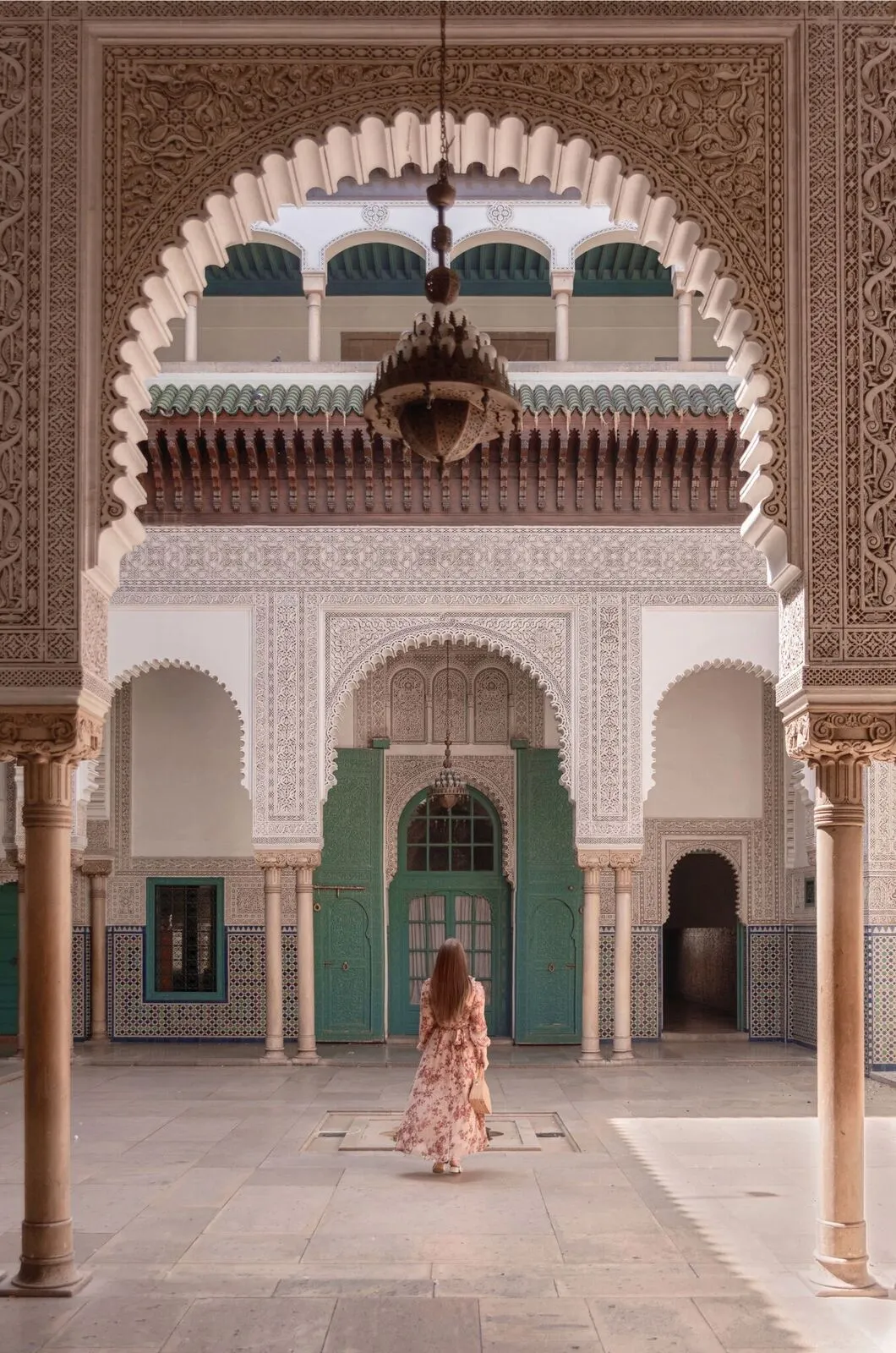
Casablanca is often described as the most “European” city in Morocco, but that impression does not really hold once you are there. It feels distinctly North African in rhythm, atmosphere, and street life.
There is a modern side to the city. Wide roads, business districts, and contemporary buildings give it a functional, urban character. It can feel more business-oriented than visually expressive at street level.
But the real character shows up in the older areas. The Habous Quarter is where things slow down, with traditional architecture, small shops, and a more detailed, human scale. It feels closer to how people actually live in the city.
The historic fabric carries most of the atmosphere. Art Deco buildings from the French colonial period are still present in parts of the city centre, often slightly worn but full of character when you notice them among the newer developments.
The Hassan II Mosque sits right on the edge of the water and is the clear highlight. Its scale, detail, and location alone are enough to justify putting Casablanca on a travel bucket list.
Yerevan


Yerevan is often described as a bit rough around the edges, shaped heavily by Soviet-era planning and brutalist architecture that many people find unattractive. But underneath that, it is also warm, walkable, and surprisingly easy to connect with.
At the same time, the city centre feels different. Around Republic Square, the pink tuff stone buildings give Yerevan a more distinctive look, and in the evening the fountains and public space become more active.
The Cascade Complex is one of the main viewpoints. It’s a long set of steps leading up over the city, with open views from the top and Mount Ararat visible in the distance on clear days. Nearby, Mother Armenia overlooks the city from Victory Park.
Religious landmarks are spread throughout rather than isolated. Saint Gregory the Illuminator Cathedral is one of the most prominent, while smaller churches appear across different neighbourhoods.
A lot of everyday life shows up at Vernissage Market, where stalls sell crafts, antiques, and local items in a very informal setting.
Food is simple and local, and brandy is part of the culture. You’ll see names like Ararat everywhere, and places like the Yerevan Brandy Company or Noy reflect that long-standing tradition.
And beyond that, Yerevan lets you explore some of the most beautiful places in Armenia.
In conclusion…
Have you been to any of these cities? Curious to know which ones surprised you, or didn’t live up to expectations at all.
I would love to hear your thoughts, so if you have any feedback or additional tips, leave a comment below. Also, check out my Instagram for regular travel videos and travel inspiration. Or explore other destinations on this travel blog.
